For sale
“What is the best family pontoon under $50,000?”
Used Pontoons under $50k for sale
- Under $50,000
- Deck space by the square foot
- Tows the tube, hauls the family

The best family pontoon under $50,000 is a layout question wearing a price tag. Every pontoon is the same machine underneath — aluminum logs, a fenced deck, an outboard on the back — so the money buys square footage and furniture, and the furniture decides who the boat serves. Three shapes cover the market: the fish-first barge, the cruise deck, and the lounge boat.
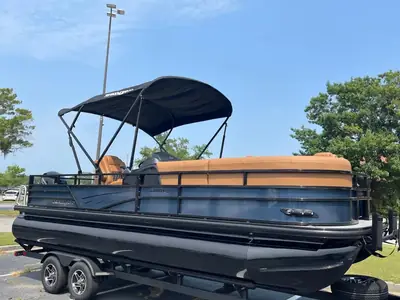
The fish-first barge puts pedestal seats, rod holders and livewells at both ends and the family lounge amidships, so the six a.m. fisherman and the noon flotilla share one hull without a treaty. Sun Tracker built a catalog empire on exactly this compromise, and its barges remain the cheapest whole boats on the water:
Ranger arrived from tournament bass boats to run the same errand with powder-coated logs — the corrosion argument settled at the factory — at roughly double the money:
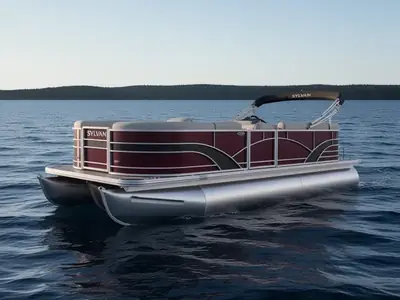
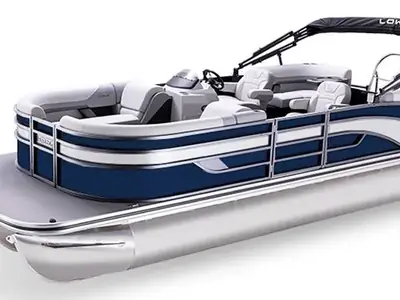
The cruise deck is the floating porch proper: bow lounges facing aft lounges across an open floor, a bimini, a stereo, and nothing to argue about. It is the shape most families actually use, because most pontoon afternoons are a picnic that happens to float — and it is where the young yards attack hardest: Barletta made a power bimini standard on a value line and grew at a pace the legacy yards spent decades on. The lounge boats push the porch further still — suffixes like Q and LZ on model names flag the lounge floors, chaises arranged so four adults recline without negotiating:
Tube count is the honest performance conversation. Two logs — the toon — carry modest ratings, plane reluctantly and are happiest at picnic and tube-towing speeds. The third log — the tritoon — stiffens the ride in chop, lifts the horsepower ceiling into genuine watersports territory and uses every horse you feed it. The corollary cuts against the brochure: on two logs, big horsepower mostly buys noise, because the hull tops out on its own terms. For tubes, swimming and sunsets, a two-log boat with 115 to 150 on the transom is the sweet spot and the savings are real; if a slalom skier lives in the family, budget the third tube first and the horsepower second.
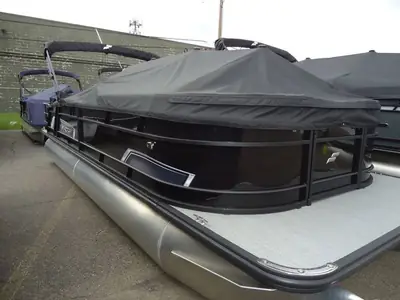
And the age question answers itself the way it does on every open boat: a newer 22 beats an older 26. Vinyl, stitching, canvas and carpet age on the sun calendar rather than the hour meter, and a pontoon is mostly furniture; an older 26 is simply more square feet of everything old, with tube welds and transom brackets carrying a decade's more electrolysis besides. The paperwork clinches it — pontoon structural warranties are famously long and often stop with the first owner, so the lifetime coverage that helped sell the boat new is usually not part of the used deal. A recent hull that shows its care beats a big old one on numbers, every time:
If the family's water is bigger and the mission is speed rather than porch, the same budget buys a V-hull and a top end: argue with the bowriders under $50k before you sign anything.
Our picks
Join the beta, and Scout watches every site for you.
Gated sites included, in your own session — with what each boat is worth, how long she has been for sale, and the reading behind each one. The beta opens by invitation; the Discord is where it is discussed.
✍︎ Drafted with AI, directed and reviewed by a sailor — our editorial disclaimer.
Keep reading
- designer Fountaine Pajot
- niche Wake & ski boats under $100k
- designer Hunter
- designer Wellcraft
- scout preview The Gemini question — why the affordable catamaran is always a Gemini